
How to Organize Food Storage Containers and Stop Losing Lids
If your kitchen cabinets look like a Tetris game of mismatched containers and orphaned lids, you’re not alone. A consistent system makes meal prep faster, reduces wasted space, and prevents the endless hunt for the matching lid.
This guide offers practical, tested strategies to tame containers and keep lids paired and accessible—no gimmicks, just simple steps you can implement in an afternoon.
Start by Decluttering and Sorting
Empty the cabinet or drawer where you keep containers. Sort items into four piles: keep, donate, recycle, and single lids. Be strict—cracked containers, warped lids, and mismatched odd pieces should go. Once you’ve pared down, group by material and use: glass, plastic, microwave-safe, and meal-prep quart-size containers.
If you’re in the market for a new coordinated set to simplify this step, consider selecting a reliable selection from the site’s Food Storage Containers collection—matching shapes and stackable designs make organizing much easier.
Adopt the One-Shape, Multiple-Size Rule
Choose containers that nest and stack on a single footprint. One-shape families (rectangular or square) nest inside each other and allow lids to stack neatly. Keep a dedicated stack for commonly used sizes on the most-accessible shelf or drawer so you can grab what you need without disturbing the whole stack.
For meal prep or freezer use, a large multi-piece set like the Freshware Food Storage Containers are useful—their consistent shapes and stackability reduce mismatches and nesting headaches.
Keep Lids Visible and Corralled
Lids are easier to manage when they have a permanent home. Use a shallow basket, a magazine file, or a narrow bin on a shelf dedicated to lids. Collapseable or open baskets keep lids upright and visible so you can quickly find the correct diameter.
If you prefer a cleaner shelf look, a set of decorative bins works well to hide the visual clutter while keeping lids together—see the Decorative Storage Baskets for attractive containment options that match living-area style if your kitchen is open-plan.
Store Lids Separately, but Nearby
Attach a storage zone for lids next to where you keep containers. This can be a vertical slot system inside a cabinet door, a shallow drawer organizer, or a vertical file stand on a shelf. The rule: lids live in their own container but remain within one reach of the containers themselves.
For drawers, adjustable inserts keep lids from sliding and make retrieval tidy. The Vtopmart 2.36″ Drawer Dividers are an example of an insert system that can be adapted to hold lids vertically and keep sections separated for sizes.
Use Vertical & Door-Mounted Solutions
Vertical storage maximizes space and prevents stacked piles from toppling. A vertical rack for lids or a hanging file organizer mounted inside a cabinet door lets lids slide into slots by size. If cabinet doors are full, consider wall-mounted or inside-door racks for frequently used lids.
For small lids, fridge-side magnetic shelves or racks can be surprisingly useful—magnetic shelving keeps items visible and saves interior cabinet space. A slim magnetic shelf system like the HuggieGems Magnetic Spice Rack can serve double-duty for small lids, accessory jars, or frequently used condiment containers.
Standardize for the Pantry and Open Shelves
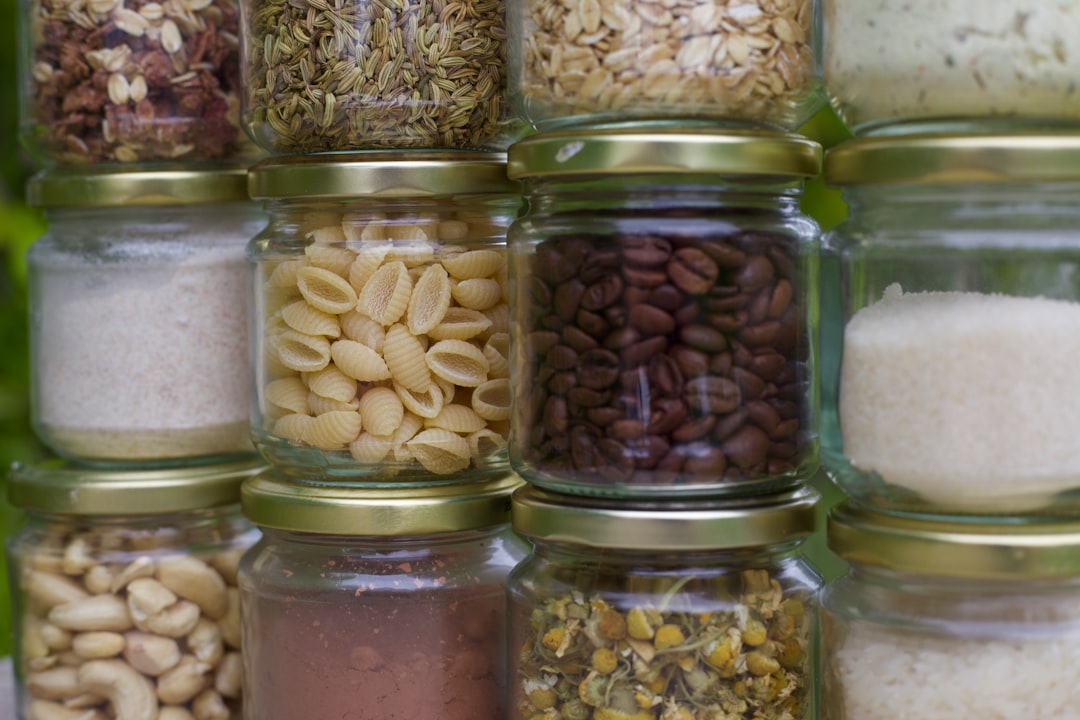
In the pantry, swap mismatched containers for coordinated glass or airtight sets. Square or rectangular jars make better use of shelf space than a mismatched collection of round containers. Group like items—grains, flours, snacks—together and use a designated shelf or labeled section for empty storage containers so they’re always easy to find.
If you want durable, attractive glass sets for pantry staples, the ComSaf Glass Pantry Storage Containers are a practical option for dry goods and long-term pantry organization.
Labeling, Rotation, and Daily Habits
Label lids or container edges with content and date when storing leftovers. Use a simple waterproof marker or small label tape—labels reduce “what’s in this?” time and make rotation easy. Keep commonly used sizes at eye level and return lids to their home immediately after washing: the one-touch return habit is the most durable fix for lost lids.
For dedicated pantry storage, consider matching container categories for purpose-built organization—browse Pantry Storage Containers to replace mismatched jars and regain shelf efficiency.
What to Buy Versus What to Keep
Buying selectively saves time: invest in a few multi-size stacks and one uniform set for pantry staples. Keep only containers you use weekly; donate or recycle the rest. If you need lids-only replacements, many brands sell lids separately or universal lid organizers can adapt to mixed sets.
For small kitchens, spice racks and narrow organizers can pull double duty for small containers, lids, and single-serve jars—see the Spice Racks & Organizers for compact organizing tools that help when shelf space is tight.
Quick Checklist
- Empty and declutter: keep only intact, useful containers.
- Group by material and size; choose nesting, stackable shapes.
- Designate a separate lid zone (basket, vertical slot, or drawer).
- Use drawer dividers or vertical file holders for lids.
- Label leftovers and practice one-touch return after washing.
- Replace mismatched pantry jars with coordinated containers.
- Corral small lids or accessories with magnetic or narrow racks.
FAQ
Q: How do I stop lids from getting lost in the dishwasher?
A: Use a mesh bag or a top-rack bin for small lids, or place lids nested inside a container so they wash together. Designate a dishwasher-safe lid basket to keep them contained.
Q: Should I store lids on containers or separately?
A: For space-saving, store lids separately in an upright bin and containers nested. For rapid pair-up after cooking, keep lids clipped to containers with rubber bands or use a small bin near the sink for immediate re-pairing.
Q: What if I have many oddly shaped lids?
A: Keep odd lids in a labeled “miscellaneous” basket and minimize future purchases of unique shapes. Consider replacing odd items with a uniform set over time.
Q: Are glass containers worth it?
A: Yes for pantry staples and oven-safe needs: glass is durable, non-porous, and stackable. Reserve plastic for lightweight, freezer, or disposable-use scenarios.
Q: How do I organize lids in a deep cabinet?
A: Use vertical file organizers, narrow baskets, or tiered shelf risers so lids aren’t buried. A shallow, wide bin at the front of the cabinet keeps them accessible.
Conclusion
Organizing food storage containers is about creating consistent homes for both containers and lids. Declutter, choose stackable shapes, dedicate a nearby lid zone, and build a one-touch return habit. With these small changes you’ll save time, regain cabinet space, and stop losing lids for good.
Products Featured in This Article
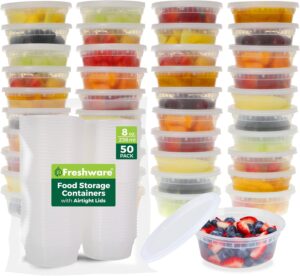
Freshware Food Storage Containers […
Stay Fit And Healthy – Enjoy Nutritious Homemade Meals Everywhere With The #1 Food Storage Containers…
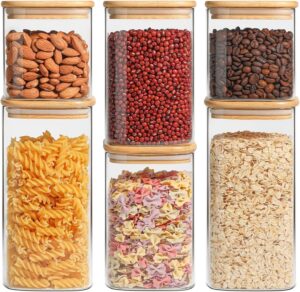
ComSaf Glass Pantry Storage Contain…
Product description The video showcases the product in use.The video guides you through product setup.The video…

HuggieGems Metal Magnetic Spice Rac…
From the brand Magnetic Spice Rack Magnetic Spice Rack Shower Caddy Rustproof MaterialMetalSpace saver on the…
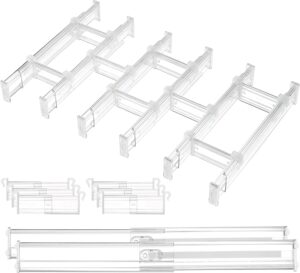
Vtopmart 2.36″ Drawer Divider…
Product description 1 for Flatware 2 for Kitchen Utensil 3 for Office Supplies 4 for Tools…
